Tiebacks vs. Soil Nails: Choosing the Right Earth Retention Solution
Understand the pros and cons between using helical tieback anchors and helical soil nails for an earth retention project.
When it comes to earth retention and slope stabilization using helical anchors, two common solutions are typically considered by contractors: helical tieback anchors and helical soil nails (also known as a Chance® Soil Screw®). Both methods are functional alternatives with respect to wall design and construction, but understanding their advantages and disadvantages is essential for selecting the right approach for your project.
What Are Tieback and Soil Nail Walls?
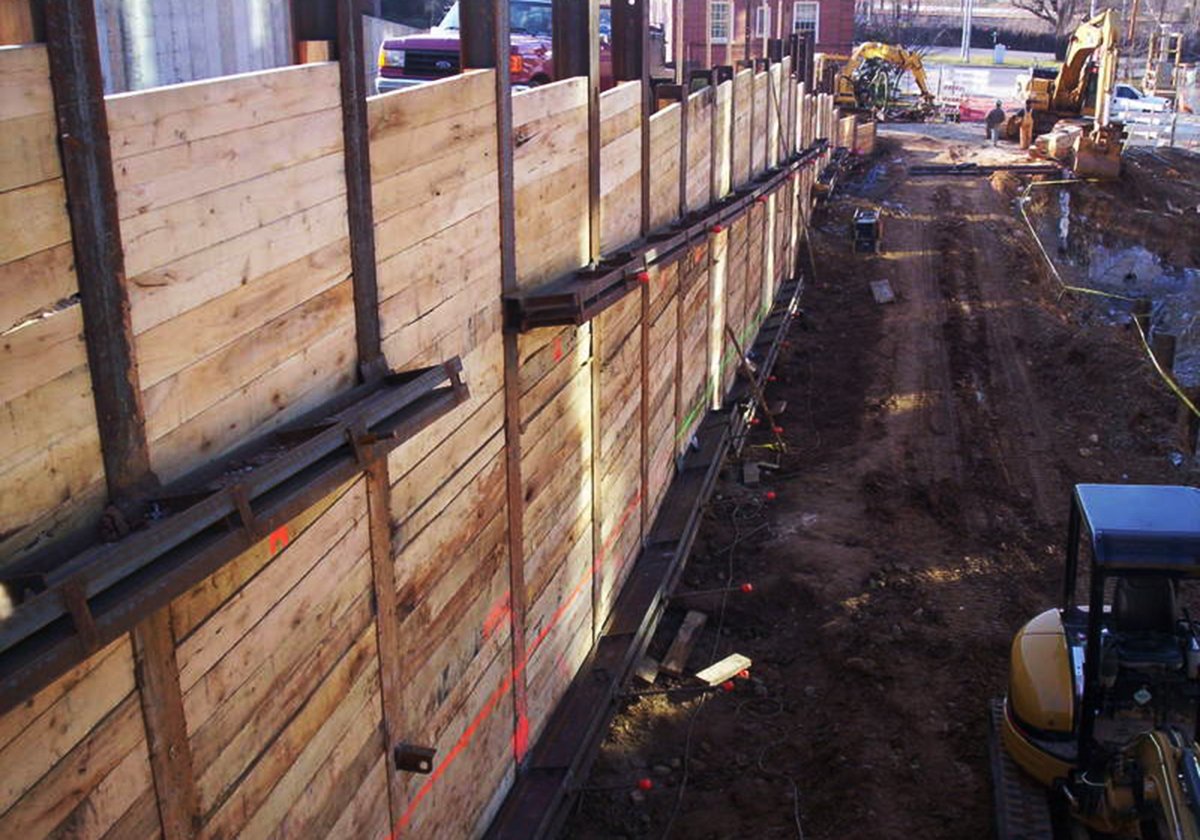
Tieback Walls are anchored earth retention structures that actively restrain soil movement due to active soil pressure. Helical tieback anchors connect directly to the structural wall elements (soldier & sheet piles and walers) and provide resistance against overturning forces. A helical tieback anchor is a high-tension soil element with one or more helix bearing plates located near the tip of the anchorage. It is screwed or rotated into the soil behind the wall. The helical tieback extends well beyond the potential failure plane behind the wall face and transfer loads to stable soil, ensuring minimal wall deflection.
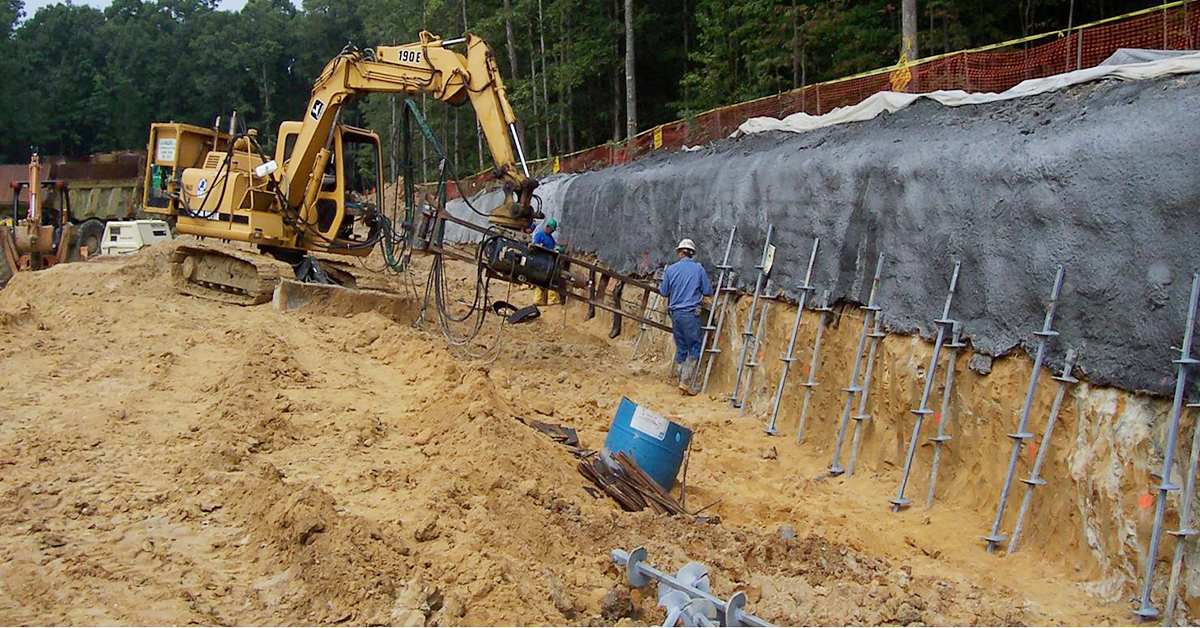
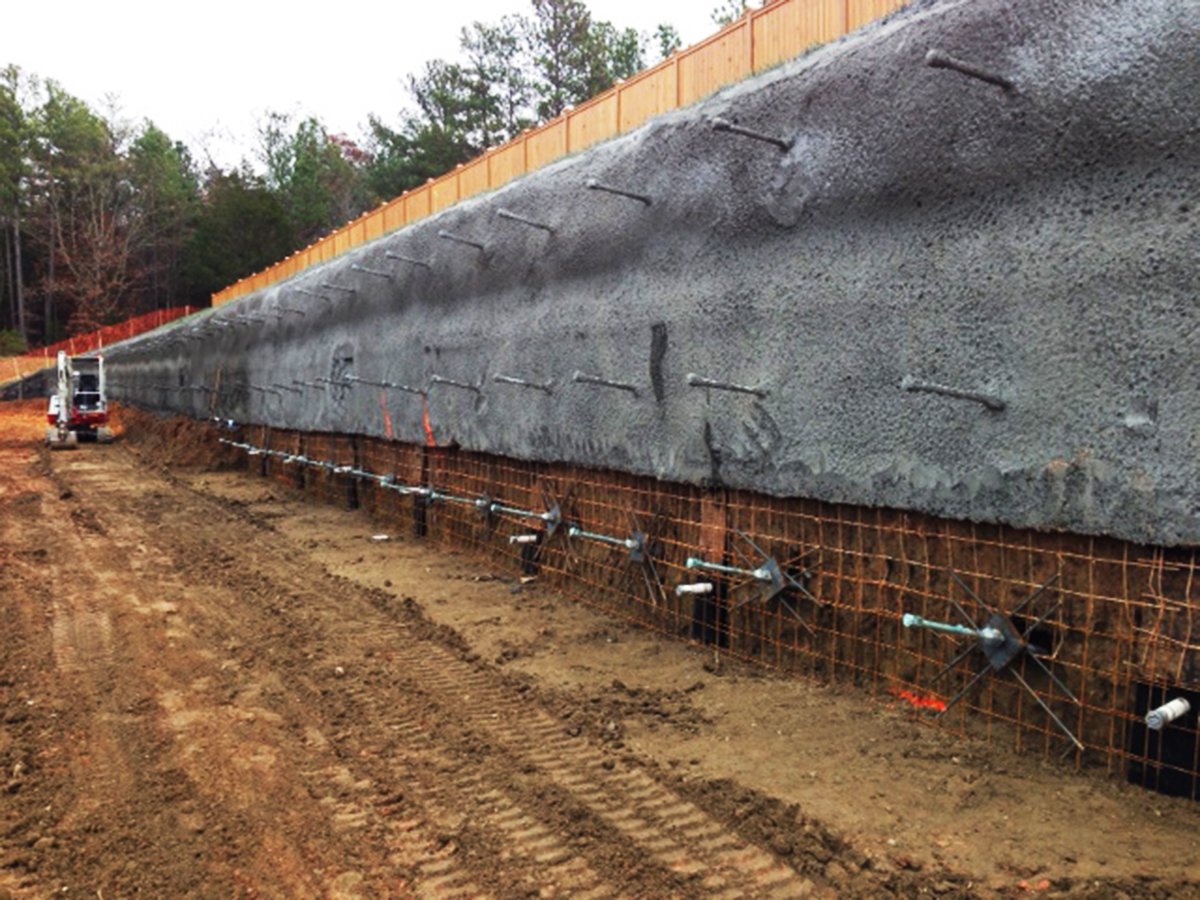
Soil Nail Walls are reinforced soil retention structures that utilize soil nails to reinforce the existing soil mass, allowing it to behave like a gravity wall. Instead of actively resisting movement, soil nails act to reinforce the soil mass behind the wall, which retains the soil mass behind it. Soil nails work by providing passive resistance when the soil mass begins to displace. Helical soil nails have helix plates of the same diameter spaced continuously along the length of the nail (screw). They are also screwed into the soil behind the wall in a vertical and horizontal grid pattern.
Chance helical soil nails are sold under the Soil Screw® brand name. In this article, I will use Soil Screw as a synonym for helical soil nails.
Key Differences
Load and Movement
-
Helical tieback anchors are pre-loaded, reducing lateral wall movement significantly.
-
Soil Screws are not pre-loaded; they mobilize resistance as the reinforced soil mass moves, making them suitable for applications where some movement is acceptable.
Capacity and Dimensions
-
Helical tiebacks handle higher loads (up to 200 kip or more) and are typically longer (30–60 feet) than Soil Screws. Tiebacks are arranged in one or more tiers (rows) depending on the wall height and the active earth pressure behind the wall.
-
Soil screws generally support lower loads (less than 40 kips) and are shorter, often 70 –100% of the wall height. The practical limit for wall height using Soil Screws is around 40 ft.
Construction and Facing
-
-
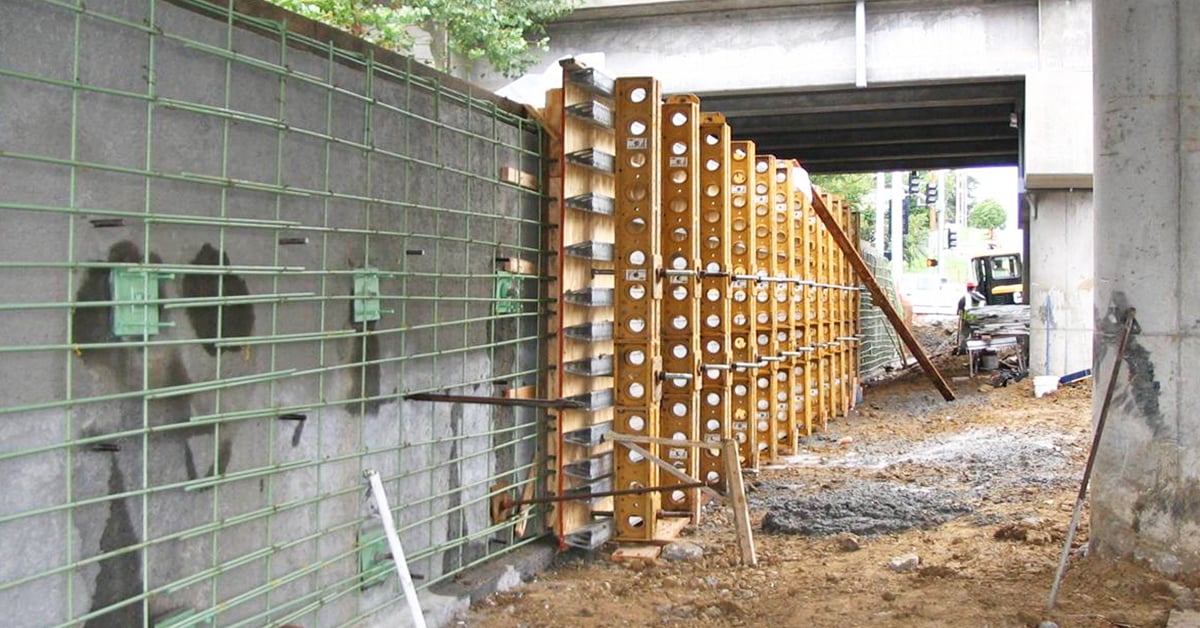
Helical tieback walls often use soldier piles with wood lagging or sheet piling, requiring structural facing to manage loads. Tiebacks connect to the wall either directly to the solder piles or indirectly via walers.
-
Soil screw walls typically use shotcrete facing with welded wire mesh, primarily to prevent erosion rather than resist significant loads. Local reinforcement is often used to connect the Soil Screws both vertically and horizontally.
-
Spacing
-
Helical tiebacks: fewer anchors but higher capacity, roughly 120 sq. ft. per tie.
-
Soil screws: closer spacing, about 5 ft x 5 ft grid (25 sq. ft per anchor).
Applications
-
Helical Tieback Walls are Ideal for deep cuts, minimal movement tolerance, and developed areas with existing structures or utilities. A typical example is a new building being built in an urban environment adjacent to existing structures.
-
Soil Screw Walls are best for slopes where some movement is acceptable, such as creating parking lots or widening roadways. A typical example is replacing a slope at an elevation change to increase the useable lot area for development.
Common uses include:
- Building excavations (temporary or permanent)
- Roadway widening and depressed roadways
- Bridge abutments
- Slope stabilization
- Repair or reconstruction of existing structures
Cost Considerations
If both solutions are viable, tieback walls are generally more expensive on a square foot basis due to higher load capacity and the need for heavy structural elements. Soil screws offer a cost-effective alternative for less demanding conditions.
Helical Anchor Advantages: Both helical tieback anchors and Soil Screws have advantages compared to grouted tendons and pre-stressed grouted bar. The key difference is the means of installation – helical tieback anchors and helical soil nails are both screwed into the soil via the application of torque and down pressure. They are a soil displacement foundation element rather than a soil replacement foundation element.
- Quick installation with rotary hydraulic torque motors
- Minimal vibration and limited access requirements with smaller installation equipment
- Immediate loading capability – no need to wait for grout to cure
- No need for H-piles or sheet piling (Soil Screw walls)
- Easy load testing for capacity verification
Disadvantage: Soil Screw walls must remain stable on a steep slope for 1–2 days during installation.
Learn more about the advantages of helical tieback anchors over grouted tendon methods.
Choosing the Right Solution
The decision between helical tieback anchors and helical soil nails depends on project constraints, load requirements, and tolerance for movement. For projects near sensitive structures, tiebacks provide superior stability. For less critical applications, Soil Screws deliver efficiency and cost savings. For design assistance or pricing on your next project, contact your local Chance distributor.
Recommended Posts
Built to Last: Proven Longevity & Corrosion Resistance of Steel Foundations
Going Solo: Load Improvement of Single-Helix Anchors and Piles