Helical Piles vs Concrete Foundations for Communication Towers
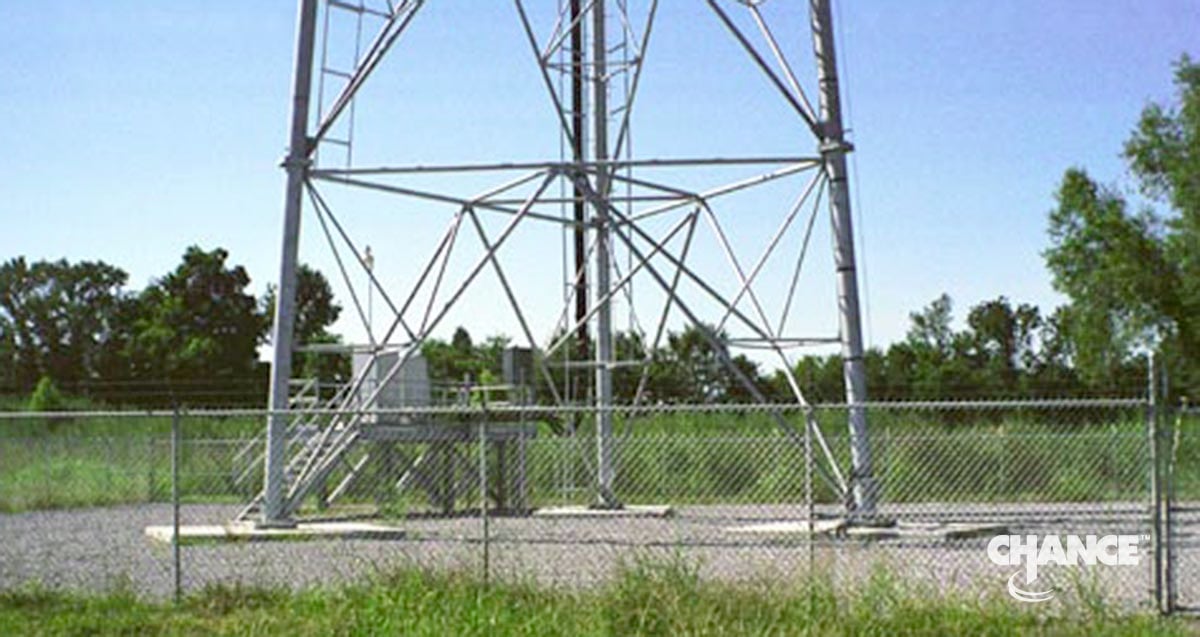
For communication towers—whether lattice or monopole—the foundation system must do more than just hold up weight. It must resist uplift from wind, handle lateral loads, perform reliably in variable soils, and be practical to build in locations that are often remote or have constrained access. Two of the most common options are helical piles and concrete drilled shafts. While both can effectively handle the service loads, they differ significantly in installation speed, environmental impact, cost risk, and performance in poor soils. This article examines the differences so tower owners, structural engineers, and project managers can choose the right system for each site and schedule.
Speed, Predictability, and Schedule Risk
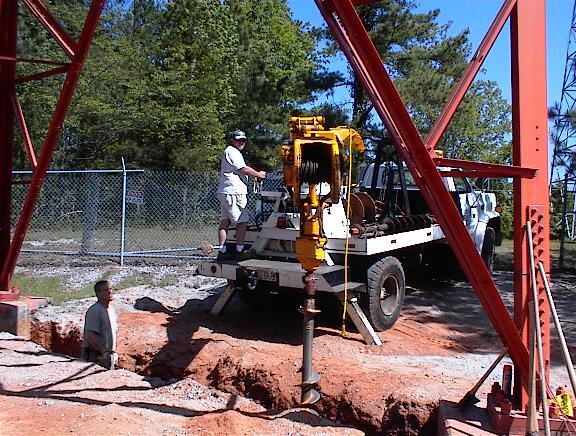
Helical piles are clear winners on speed. They screw into the ground using compact equipment, generate no spoils, and require no concrete curing—crews can erect and load the tower immediately after installation. Installation torque provides a real-time indicator of axial capacity, allowing engineers to verify performance as each pile advances. That feedback loop dramatically reduces schedule uncertainty and rework.
Concrete options—especially drilled shafts—often involve more steps: excavation or drilling, reinforcement placement, potential casing or dewatering, concrete delivery, inspection, and then 7–28 days of curing before the foundation reaches design strength. Each step introduces weather and logistics dependencies. When timelines are tight, those variables can ripple through the construction calendar and downstream radio integration.
Soil Conditions and Structural Behavior
Communication towers impose complex load paths: compression on windward legs, significant uplift on leeward legs during wind events, and meaningful lateral shear and moment. Helical piles are inherently efficient where uplift and load reversals dominate. The helix plates are anchors embedded in competent soil strata, resisting tension as well as compression. In layered or poor soils—soft clays, loose sands, fills—installers can “chase” capacity at depth by adding sections until the target torque is achieved. This ability to bypass weak strata without large excavations is a major advantage on sites with thin crusts over soft subsoils.
Concrete foundations also deliver high capacity, but their efficiency is more sensitive to near surface conditions. Spread footings work best where shallow competent soil exists; otherwise, they grow large quickly or demand over excavation and replacement fill. Drilled shafts reach deeper bearing, but in collapsible, wet, or gravelly formations they may require casing and dewatering, adding costs and risks. For lateral and moment resistance, large diameter shafts and spread blocks provide excellent stiffness. Helical systems can achieve comparable performance using larger shafts, batter piles, and pile caps that distribute loads—though the design may require more components.
QA/QC and Risk Management
One of the under‑appreciated benefits of helical foundations is the quality assurance inherent to the method. Installers record torque vs. depth, correlating directly to axial capacity. These logs, combined with selective compression or tension proof tests, produce a robust installation record and early confidence that the foundation is meeting design values. With concrete, quality control focuses on materials and workmanship(mix tickets, cylinder breaks, rebar placement), and capacity is only truly “proven” after curing or through separate load tests. If a subsurface surprise appears during drilling—loss of slurry, refusal, or caving—mitigation can be time‑consuming in the field.
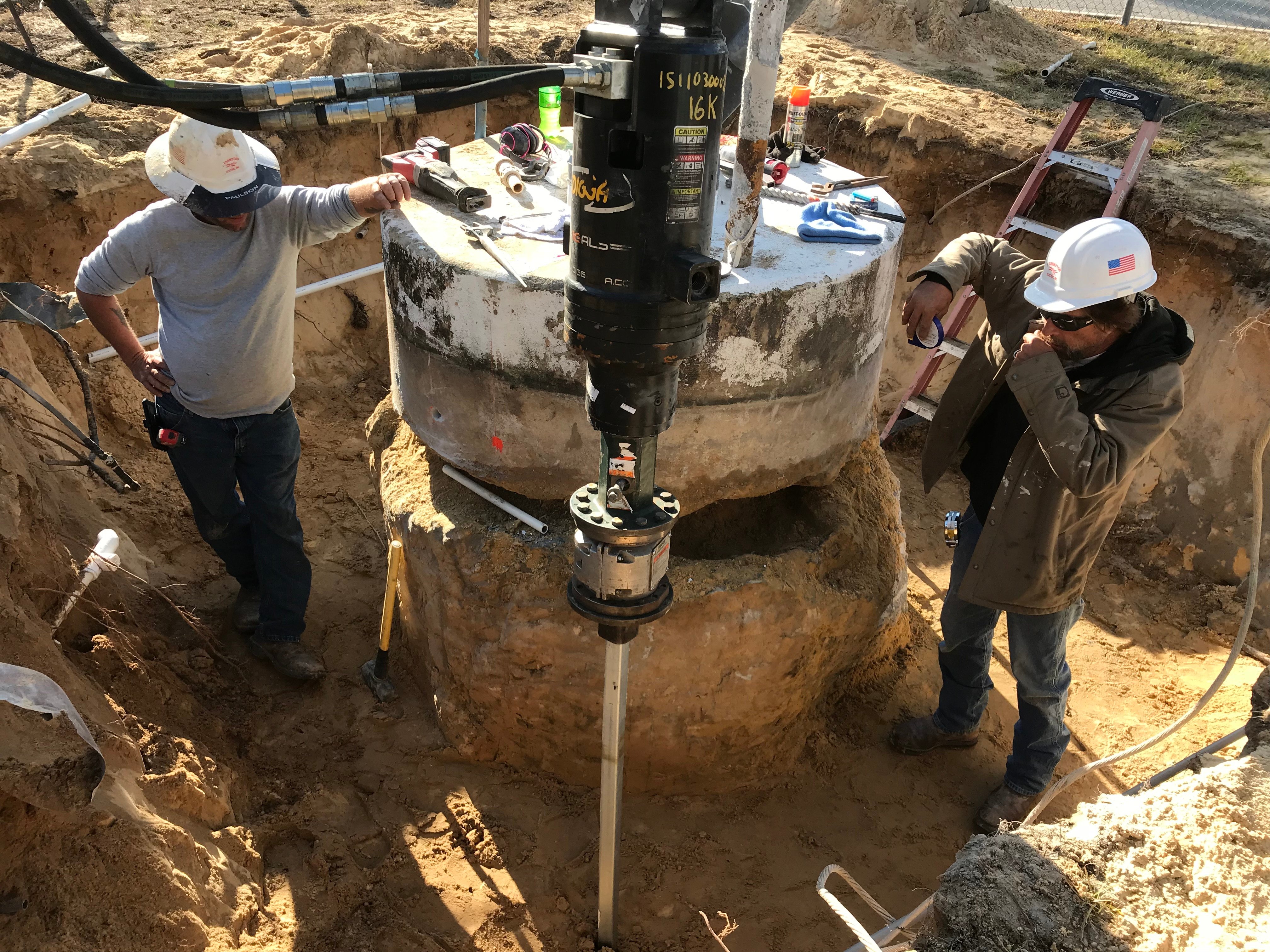
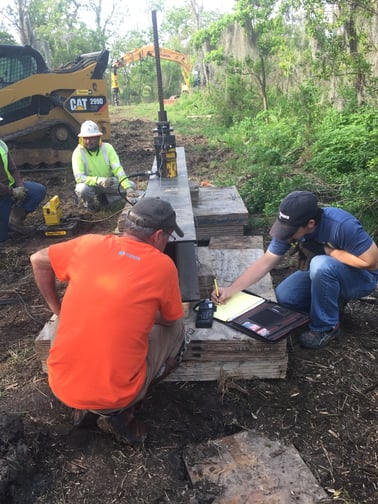
Load testing a pile on a telecommunications project
Environmental Footprint and Access Constraints
Helical piles minimize disturbance: little to no spoils, low noise and vibration, and no concrete washout. In constrained or sensitive sites—wetlands, forested areas, near existing utilities—this can streamline permitting and reduce restoration scope. Access is simpler too. Piles install with small excavators or track machines; there’s no need to get a concrete truck up a steep switchback or across a weight-limited bridge. In rural or seasonal jobs, that logistical simplicity often translates directly into cost and schedule certainty.
Concrete foundations inherently create more surface disruption—excavation spoils to manage, heavier equipment, more truck traffic. That’s may not be a problem on well-served urban sites with batch plants nearby, but it becomes a major planning factor for remote or environmentally-sensitive tower locations.
Cost, Contingencies, and When Each Option Wins
On total installed cost for typical telecom work, helical piles frequently come out ahead—especially when you factor in the premium for concrete delivery to remote sites and the value of eliminating curing delays. Smaller crews and fewer weather sensitive steps reduce contingency. Still, concrete can be cost competitive in ideal conditions: shallow competent soils, urban access, and towers with very high lateral stiffness demands where a large block foundation is acceptable.
The most important economic lens is variance. Helical systems reduce the variance associated with unknown subsurface conditions: if capacity isn’t reached, you add pile depth and/or more helices to gain higher torque. With concrete solutions, discovering unanticipated softness or groundwater in a drilled shaft can trigger casing, dewatering, redesign, or even relocation. That variance shows up as change orders, delays, and management overhead across multi-site rollouts.
Durability, Corrosion, and Lifecycle
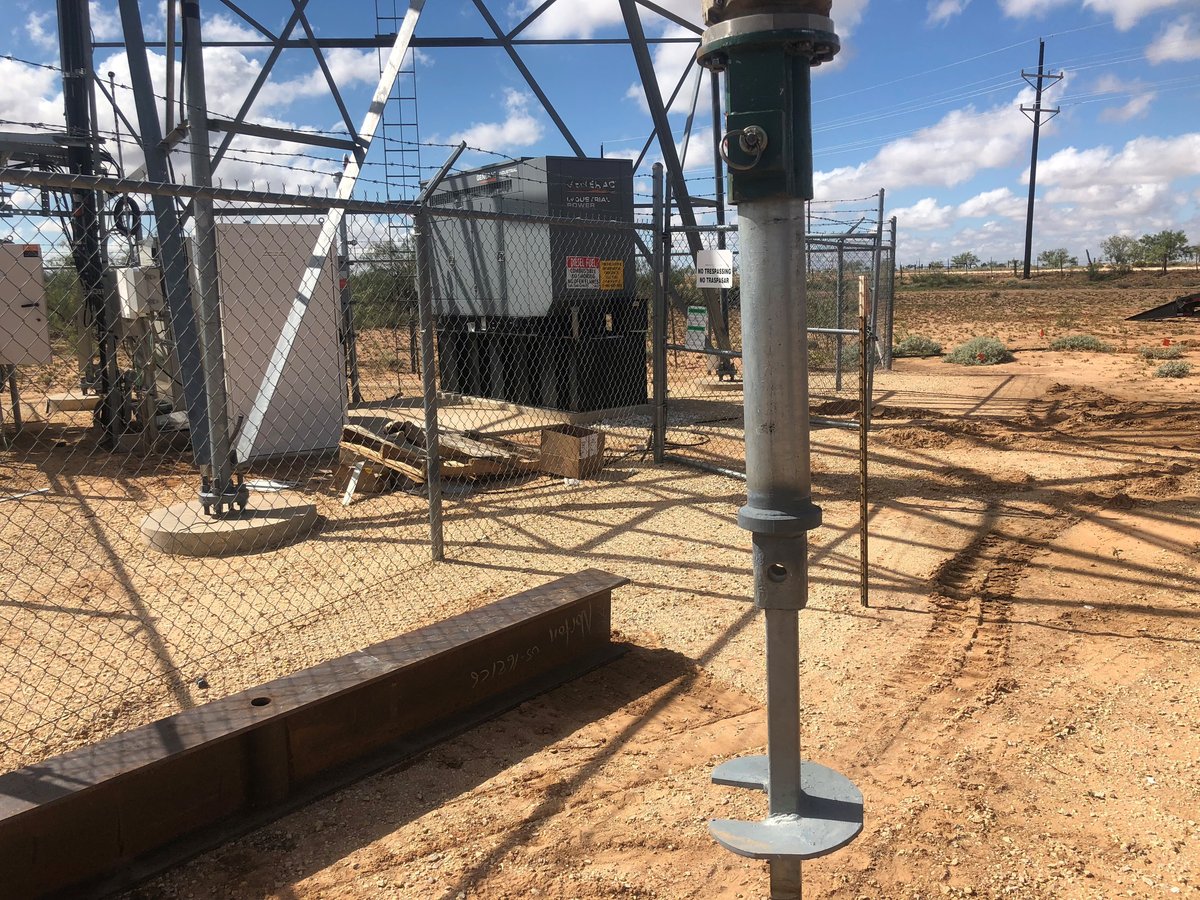
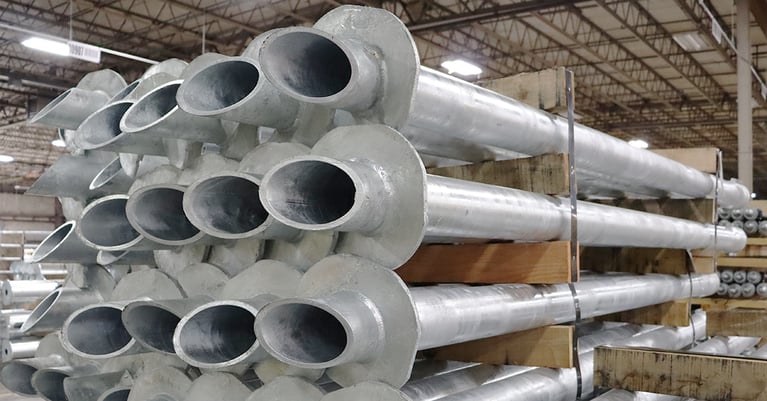
Properly designed, both systems achieve long service lives. For helicals, durability hinges on corrosion strategy: hot dip galvanizing, coatings, sacrificial wall thickness allowances, and, in extreme environments, cathodic protection. These measures are standard practice and can be tailored to soil resistivity and chemistry. Concrete durability depends on mix design, cover, crack control, and exposure class; sulfate soils and freeze-thaw cycles require attention to detailing and materials. One lifecycle advantage unique to helical piles is the ability for them to be unscrewed and removed, leaving minimal legacy impact—helpful where lease terms are short or future relocation is likely.
Practical Guidance for Tower Programs
-
Fast‑track builds, emergency restorations, and temporary sites: Choose helical piles for immediate loading and removability.
-
Remote, hilly, or access-restricted sites: Helicals simplify equipment and logistics; no concrete convoy required.
-
Poor or variable soils: Helicals shine—verify capacity with torque and add depth and/or adjust helix configuration as needed.
-
Urban sites with easy concrete access and very high lateral stiffness targets: Concrete drilled shafts or large spread footings can be efficient and straightforward.
-
Portfolio rollouts across mixed soils: Helicals reduce variance, change orders, and schedule slippage across multiple sites.
Bottom Line
Both helical piles and concrete foundations can deliver safe, durable support for communication towers. The decisive differences comedown to speed, soil adaptability, environmental footprint, and risk control. If your project values immediate loading, minimal disturbance, and predictable capacity in less-than-ideal soils, helical piles are often the superior choice. In locations with dependable shallow bearing or where massive lateral stiffness is the primary driver—and logistics are easy—concrete remains a proven, economical option. The smartest programs select the system that best matches site realities and schedule priorities, not just what’s been done before.
Reach out to your local Chance distributor for product recommendations and engineering guidance.
Recommended Posts
Built to Last: Proven Longevity & Corrosion Resistance of Steel Foundations
Going Solo: Load Improvement of Single-Helix Anchors and Piles