Helical Piles Support Piping Plover Conservation at Ogunquit Beach
In this boardwalk application, Chance helical piles delivered a win for conservation with a low-impact installation in a sensitive coastal habitat.
Eggs laid by the endangered piping plover are a creamy light brown with small dark specs on them, perfectly camouflaged in the sands of Ogunquit Beach, Maine. With each egg measuring just over an inch long, a beachgoer could inadvertently crush a clutch without even realizing it.
%20kimsmithdesigns.jpg?width=647&height=396&name=piping%20plover%20eggs%20(C)%20kimsmithdesigns.jpg) Photo courtesy of Kim Smith Designs
Photo courtesy of Kim Smith Designs
According to Maine Audubon, “Piping Plovers are listed as an endangered species in Maine and are threatened under federal law. The Piping Plover Recovery Project, a collaboration between Maine Audubon, the Maine Department of Inland Fisheries and Wildlife, U.S. Fish and Wildlife Service, the Maine Bureau of Parks and Lands and local municipalities, works to educate the public about plover nesting areas to ensure their protection and increase their population.”
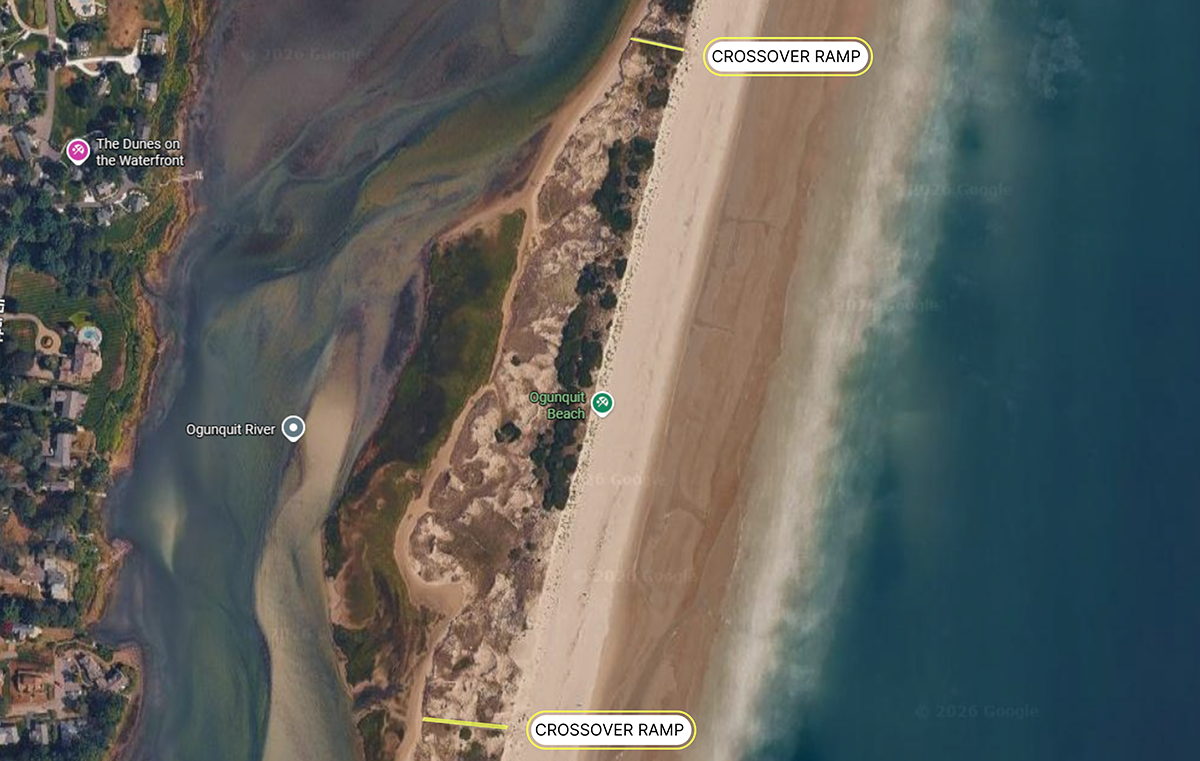
One such conservation undertaking was to build two boardwalks to protect the plovers’ nesting area from foot traffic while still giving people access to the beach.
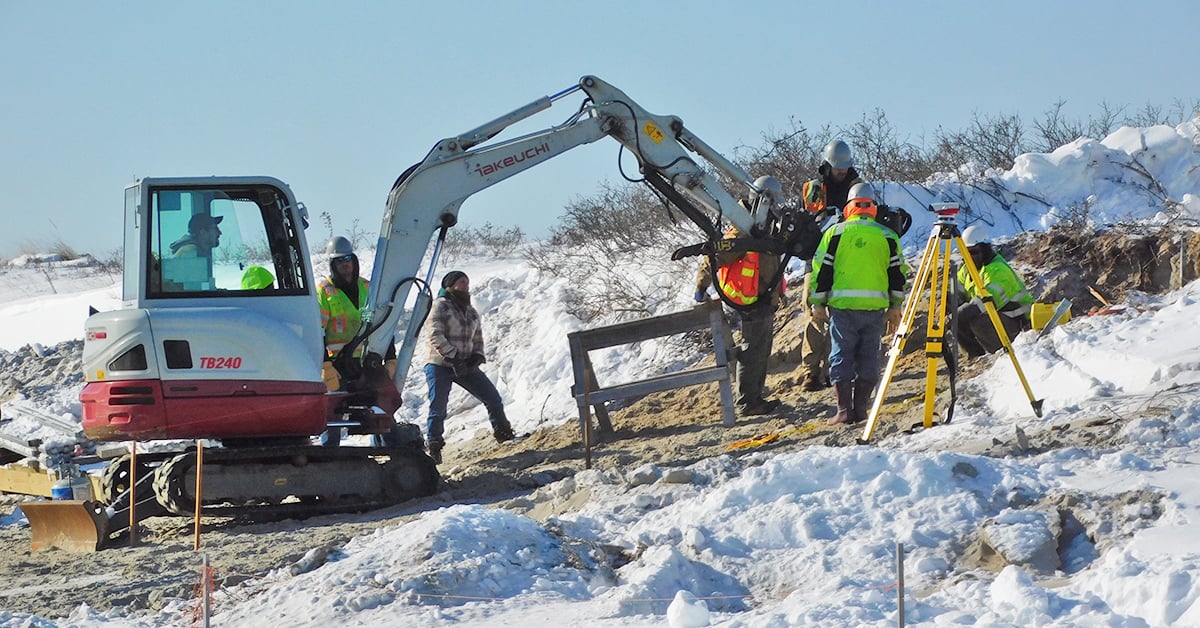
With snow on the ground and high temperatures in the teens and twenties Fahrenheit, there were no piping plovers to worry about during construction, which took place from late January through February 2026. The tiny birds migrate south to North Carolina and even as far as the Bahamas during Maine’s cold winters.
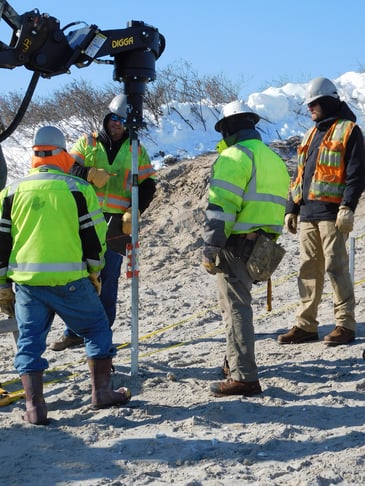 Diana Rossi, New England Territory Manager for Chance Distributor Earth Anchoring Suppliers, took the opposite route of the plovers and headed north to Ogunquit Beach for the boardwalk installation.
Chance helical piles, provided by Earth Anchoring Suppliers, were the only foundation type considered by the project engineers. Alternatives such as precast or cast-in-place concrete may require augering, sand removal, larger equipment, and greater disturbance to the surrounding area. Because the work was closely monitored by multiple environmental protection groups, helical piles were selected for their low environmental impact and minimal disturbance to the sensitive dune ecosystem.
Wyman and Simpson, Inc., general contractors based in Richmond, Maine, were chosen to build the boardwalk but had not previously installed helical piles. The crew used a Takeuchi TB240 mini excavator with a MM10K DIGGA drive head for the installation. Having already completed Chance online training courses, Rossi was on site to facilitate the crew’s field training portion of the Chance Certified Installer training program.
The on-site training session focused on best practices for helical pile installation. Rossi recalled, “The team picked it up quickly!” Because the crew had already learned the theory and installation steps through the online courses, the field training gave them an opportunity to apply that knowledge in real project conditions and install the piles with confidence.
👉 Get the industry’s best helical pile training > Become a Chance Certified Installer
With an ultimate capacity of 10 kips required, engineers spec’d Chance SS5 helical piles. With a slender 1.5-inch square shaft, the SS5 is known for its strength-to-size ratio, chosen for its high capacity compared to its small “footprint.” Compared with larger-displacement helical piles, square shaft helical piles offer the highest axial capacity with the least amount of installation torque because of their high torque correlation factor (Kt).
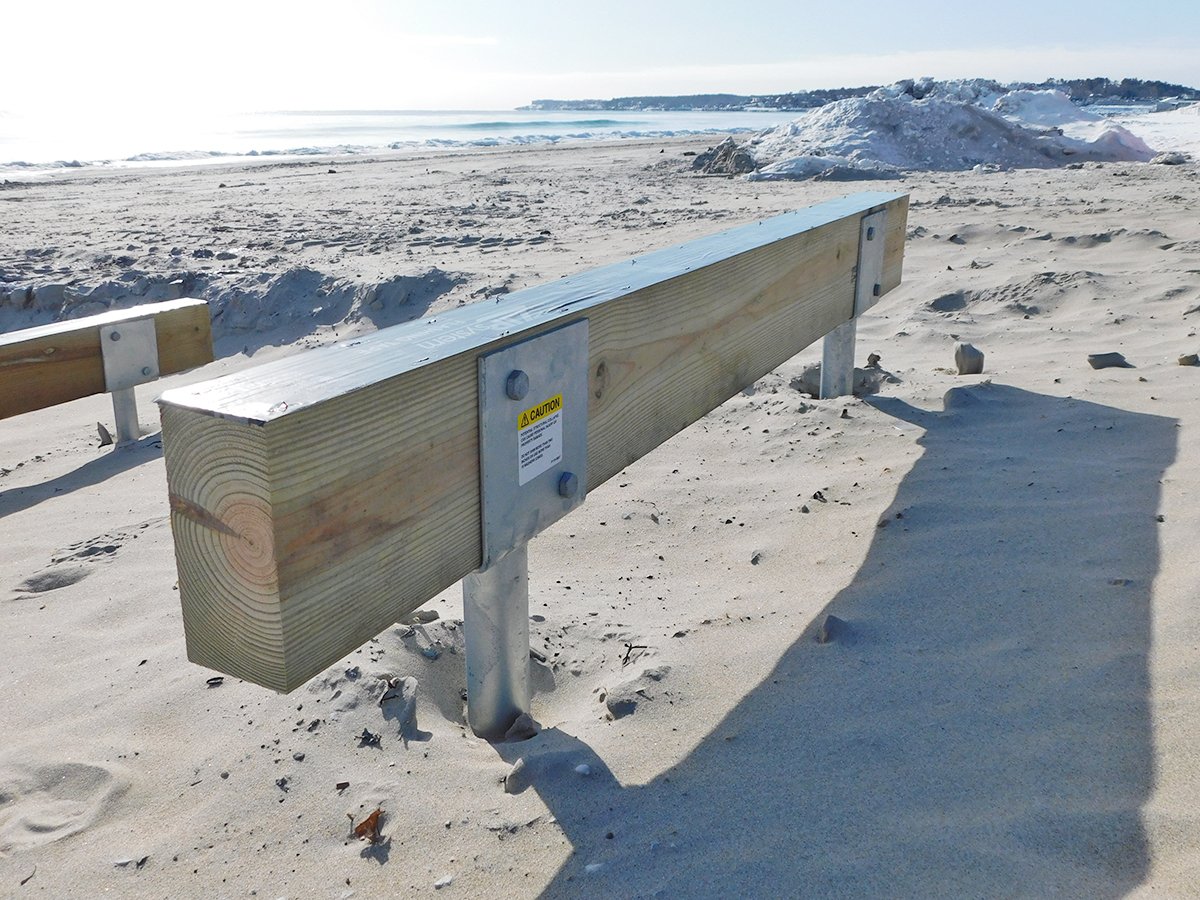
For the two boardwalks, the team installed (34) SS5 lead sections. Chance C1500397 piles are seven feet long with 3 helices, 8, 10, and 12 inches in diameter. The pile is building code evaluated and Buy America(n) qualified. Extensions were added until the depth and minimum installation torque of 1000 ft-lbs calculated by engineers was reached. Torque is measured during helical pile installation because it directly corresponds to the load capacity of the pile. Square shaft helical piles offer the lowest cost per kip at load ranges 50 kip or less due to their higher torque efficiency and lower material cost.
The piles were capped with 3.5” saddle brackets to accommodate the wood frame of the boardwalk. Since there is no excavation and no concrete to cure, helical piles can be installed in almost any weather the crew is able to safely work in. Boardwalk construction could begin immediately after pile installation, avoiding cure-time delays and keeping the project moving.
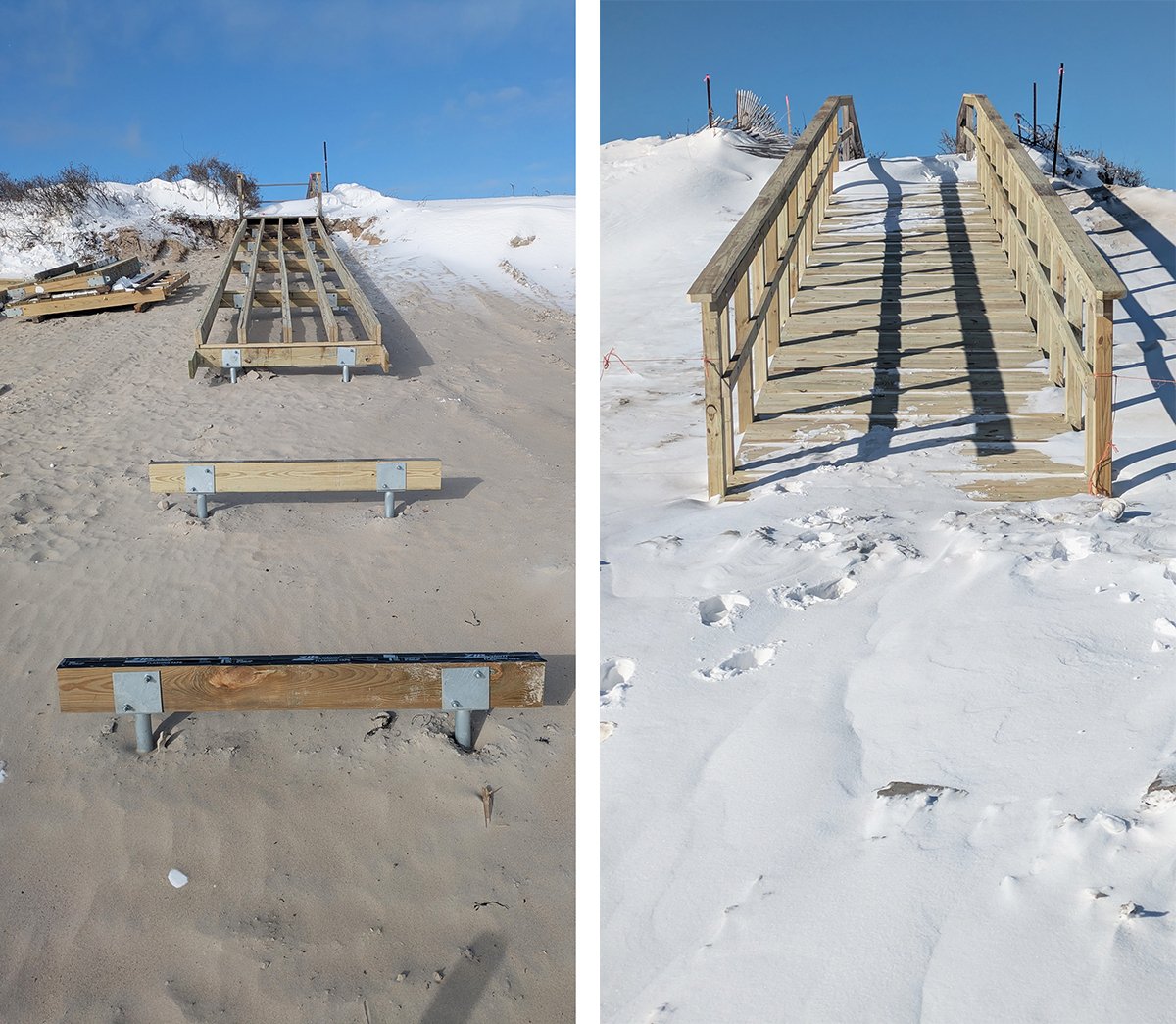
The crew appreciated the ease of installation and material handling. The heaviest pile section used in this build – the three-helix lead section – weighs just under 80 pounds.
The completed crossover ramps now give the public a defined path to the beach while helping keep foot traffic away from hidden nests and the endangered birds that rely on the dune habitat. With low-disturbance installation, immediate load readiness, and minimal impact to the surrounding sand, helical piles helped make the project possible while supporting both public access and piping plover conservation.
%20kimsmithdesigns.jpg?width=640&height=444&name=piping%20plover%20(C)%20kimsmithdesigns.jpg) Photo courtesy of Kim Smith Designs
Photo courtesy of Kim Smith Designs
Wyman & Simpson, Inc., was founded in 1924 by Maine highway engineer Walworth Simpson and A.P. Wyman. The company is one of Maine’s most long-lived and respected construction companies. Originally located in Augusta and Waterville, the headquarters are now in Richmond. Today the company is owned by Kim Suhr and Paul Berube. The firm's specialties include highways, bridges, hydro-electric and marine construction, and through the years, has built a reputation for excellence, innovation and value while constructing northern New England's essential infrastructure. In 2024, Wyman & Simpson celebrated 100 years in business as one of Maine's oldest, most respected Heavy-Highway General Contractors.
Earth Anchoring Suppliers is the authorized Chance distributor for the Northeast and Midwest United States. Founded by former installers, Earth Anchoring staff understand firsthand the pain points that deep foundation professionals encounter and strive to remove all those obstacles as a choice partner who delivers for their customers every time. Whatever your deep foundation needs are – whether it’s price, availability, delivery, engineering, training, certification, or equipment – you can count on Earth Anchoring to make it happen.
Recommended Posts
Built to Last: Proven Longevity & Corrosion Resistance of Steel Foundations
Going Solo: Load Improvement of Single-Helix Anchors and Piles